EXPERIMENTS · GAME DEVELOPMENT
Fox Noir: Building a game with AI
From a six-figure agency project with a team of 20 to developing my own game on a laptop, with Blender, Godot and a GPT Pro subscription.
Development journal · Fox Noir is a work in progress. These images show character, sprite and world-development artwork.
More than a decade ago at Rocketfuel, I worked on a game project with a six-figure budget and a team of 20.
Today, I’m building Fox Noir on a laptop while watching hockey or football, for the cost of a GPT Pro subscription.
I’m drawing on my experience in game design, production and creative direction. The experiment is how much of that process I can now direct through AI, from the first character designs to the work of bringing a game together in Blender and Godot.
Start with the character
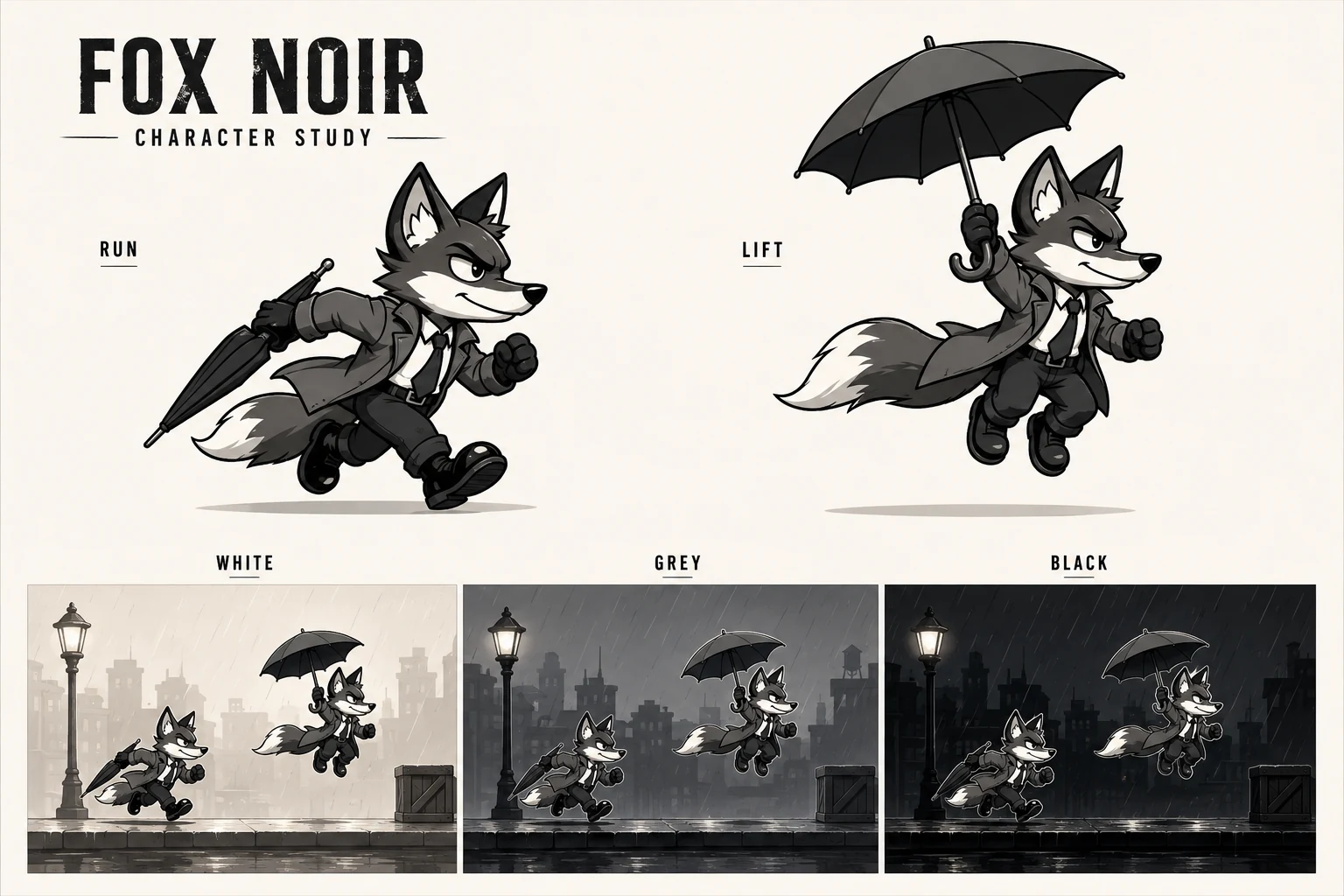
Fox Noir is a side-scrolling game built around a fox detective and an umbrella. The character runs through a noir city, using the umbrella to lift and float past obstacles.
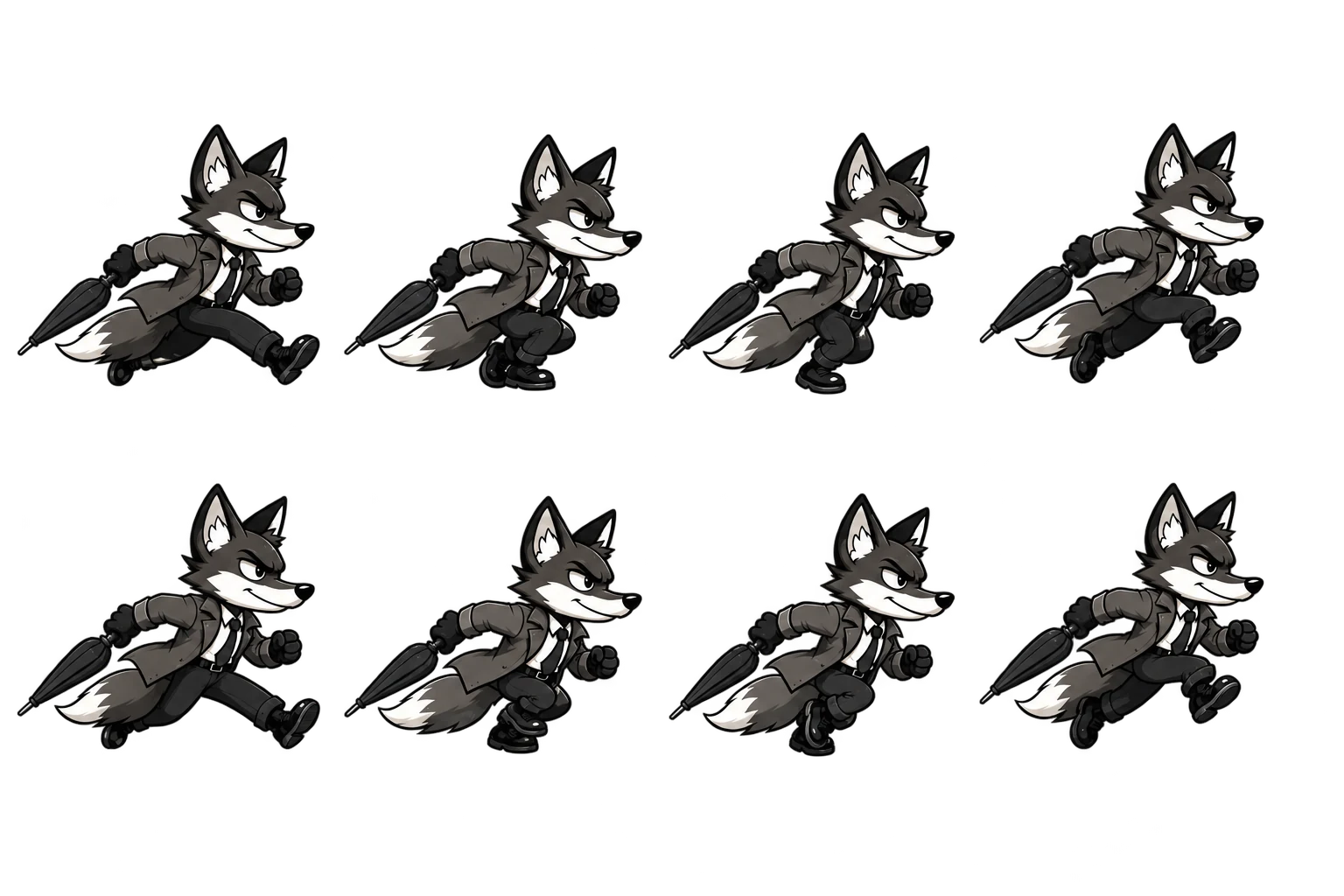
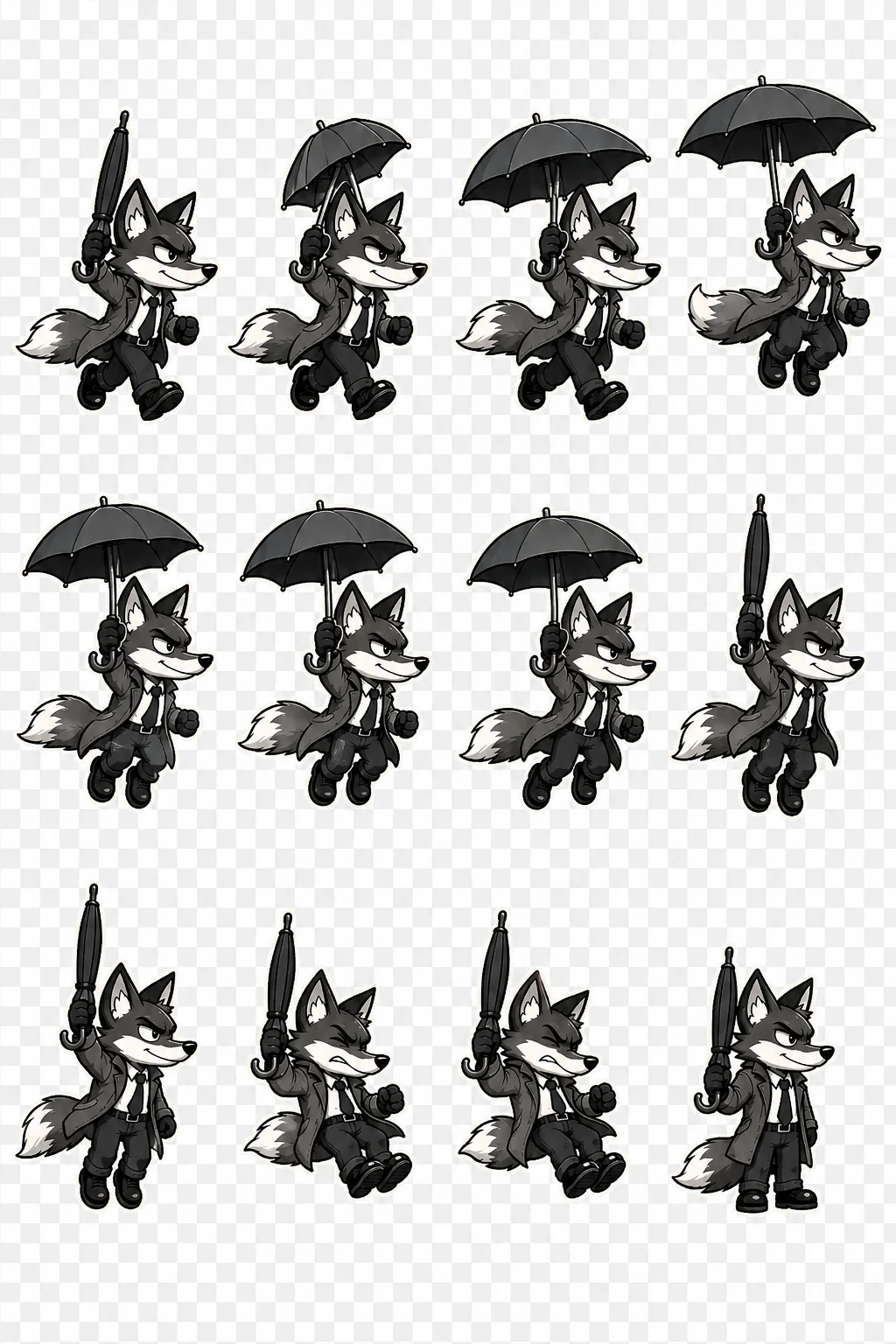
The early work starts with the character’s shape, expression and movement. The coat, tail and umbrella need to read clearly as the fox runs, rises and lands. Sprite sheets make those movements visible as a sequence of poses.
Building the world around him
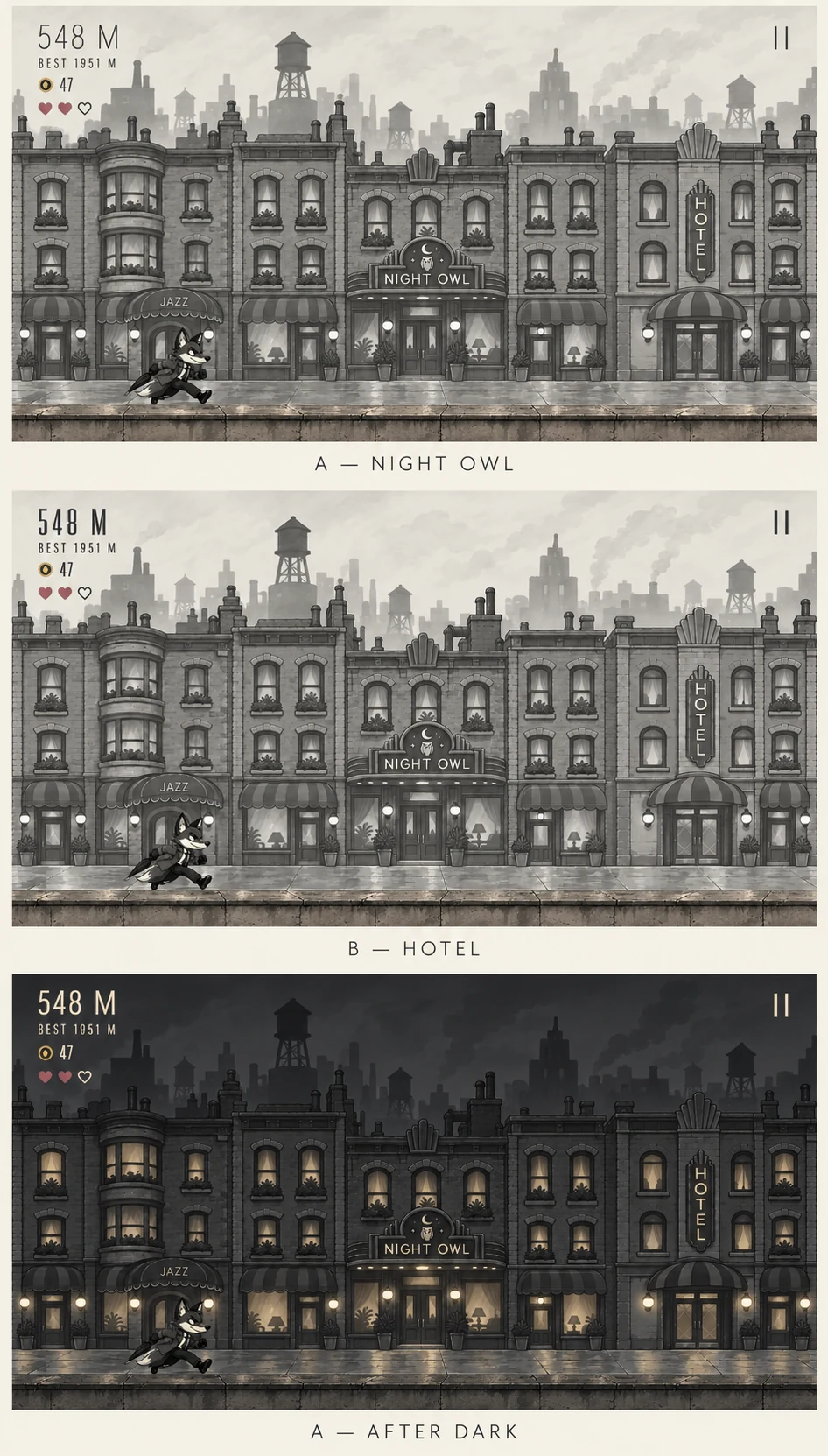
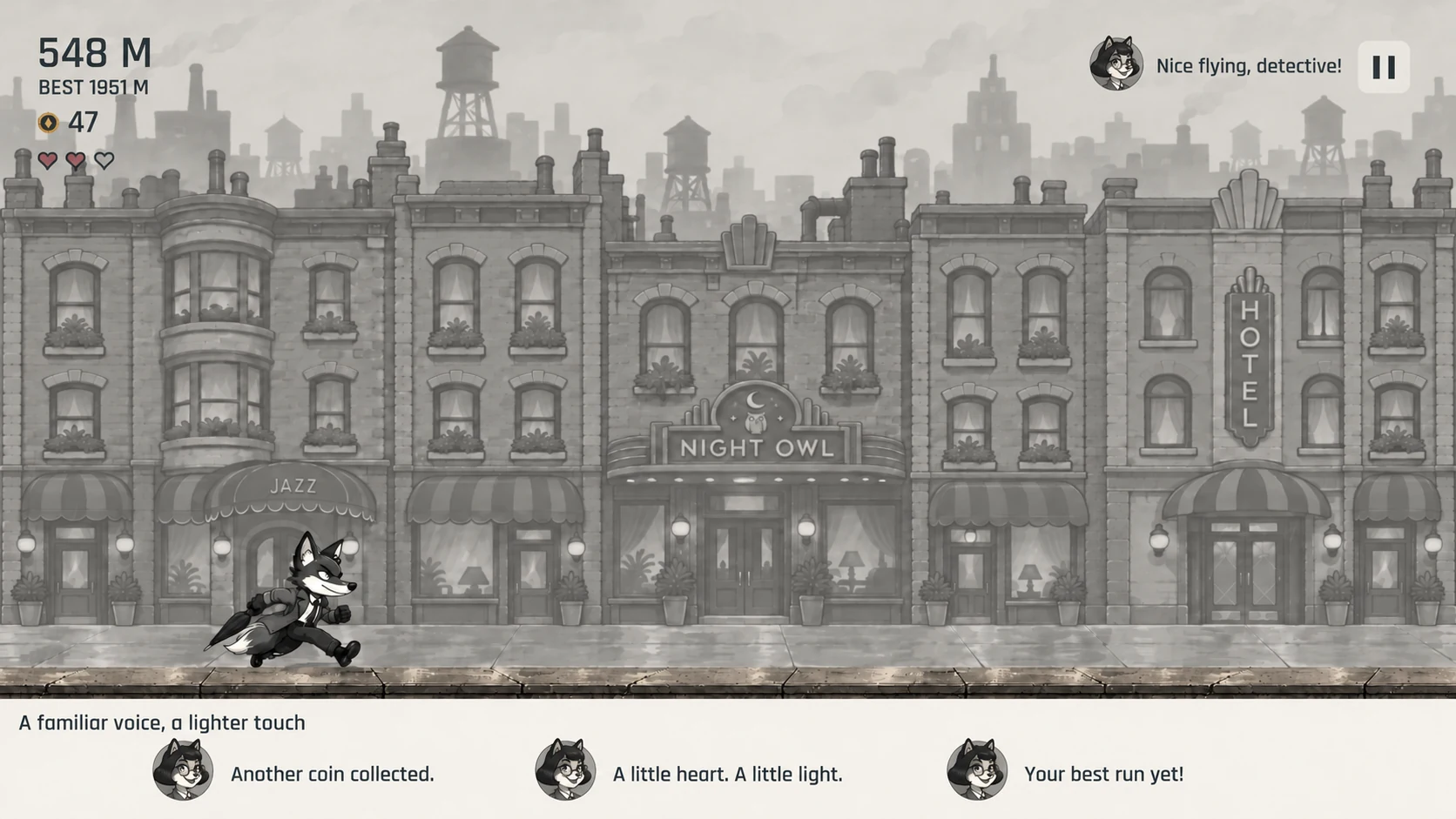
The city needs to feel like it belongs to the character: brick buildings, a hotel, a jazz club, rooftop water towers and wet streets. The overview studies explore how those pieces sit together and how the same street changes after dark.
Light and dark also connect to the game’s central idea. The intended health system moves the world through white, grey and black states, with ink vials bringing brightness back. That makes the lighting part of the player’s experience as well as the visual style.
A familiar voice in the city
The secretary character adds another presence to the game. The concept shows her portrait alongside short messages responding to the player’s progress: a collected coin, a little more health or a strong run.
It’s a way to give the world some personality without stopping the action for a long conversation.
Expanding the gameplay
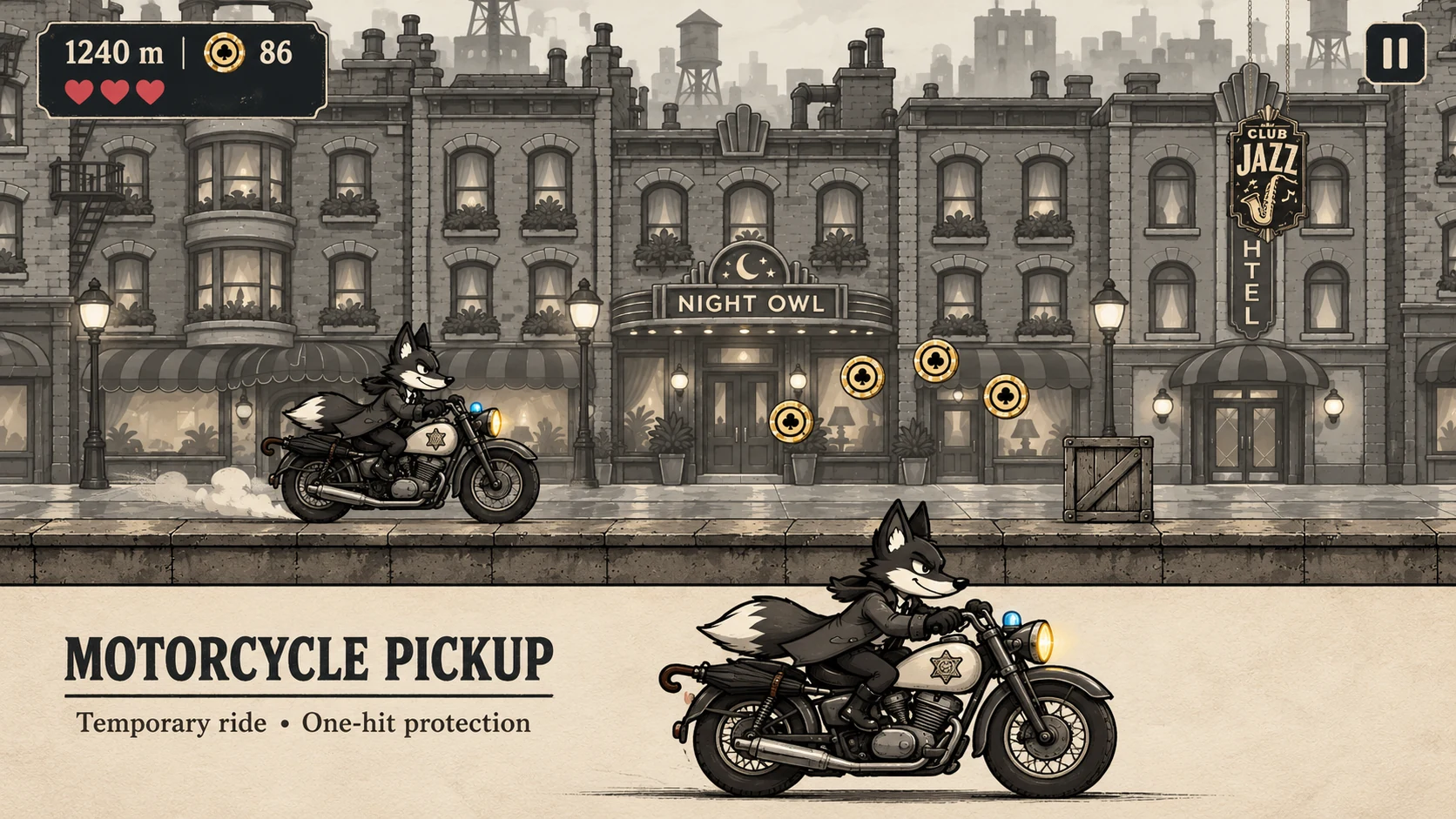
The motorcycle concept explores a temporary change of pace: a ride through the same city with one-hit protection. It brings together the character, the vehicle, the collectibles and the environment in one scene.
Then, the wardrobe
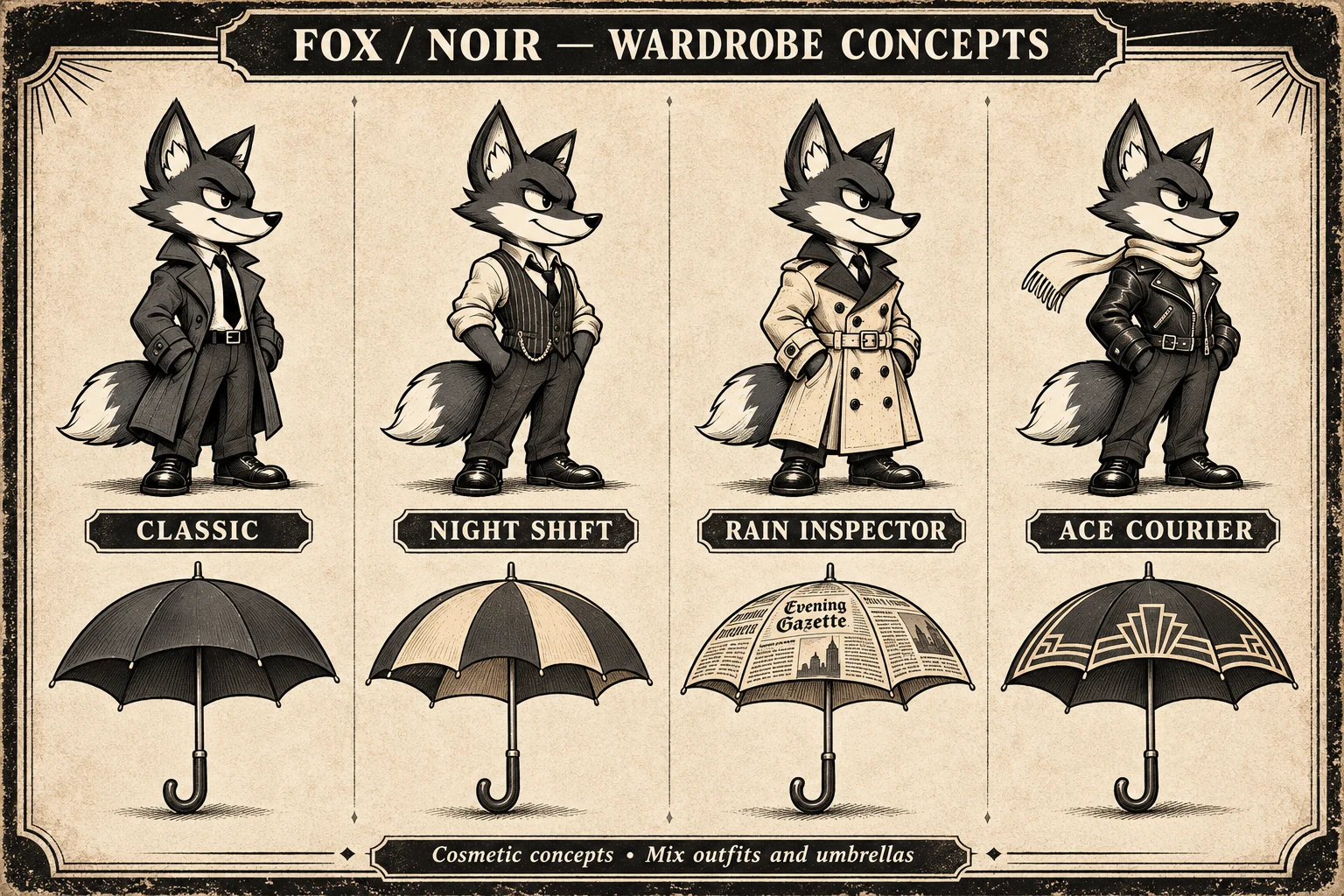
Once the character and world have a direction, there’s room to explore outfits and umbrellas. Classic, Night Shift, Rain Inspector and Ace Courier each give the fox a different look while keeping him recognizable.
These are cosmetic concepts, including umbrellas that could be mixed with the outfits.
Directing the production with AI
The larger experiment is the production process. I’m setting the direction, reviewing what comes back and working through revisions, much as I did when I led a creative team.
The work has also involved AI agents taking on separate tasks, including copywriting, QA and planning around monetization. Blender and Godot are part of the workflow for moving from artwork and assets toward a playable game.
Fox Noir is still in development. This journal records the process so far, from the first sprites to a more complete world.
About Jason Suriano
Jason Suriano is an AI speaker and Director of AI & Data Services at Tantus Solutions Group. Based in the Edmonton area, he helps enterprise and public sector organizations understand AI, establish governance and support adoption. He delivers presentations and workshops for teams in Edmonton, across Alberta and beyond.
Planning a presentation or workshop for your team? Explore speaking formats or get in touch.
Contact Jason