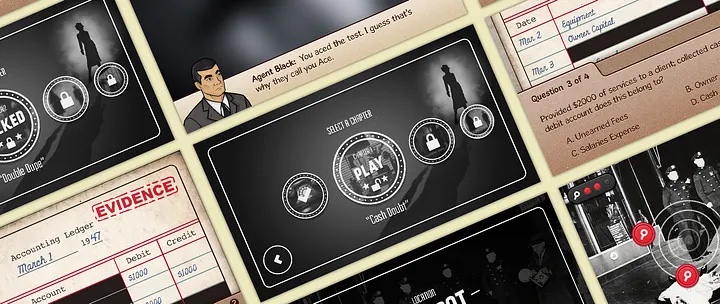
The Accounted brought accounting exercises into a detective story. Building it meant making the curriculum, narrative and interactions work together within the time and budget we had.
It remains one of the projects I’m proud of from my time at Rocketfuel. My original write-up documents how an idea became a learning product, including the decisions and revisions along the way.
Start with the learning and the story
The initial inspiration came while playing L.A. Noire. An evidence booklet suggested a way to connect a mystery with accounting. The challenge was to turn that creative starting point into a learning experience with substance.
We worked with Tilly Jensen at Athabasca University on the accounting curriculum and developed the concept with support from CMA Alberta. The subject matter needed to remain credible while the story gave learners a reason to keep working through it.
Build within real constraints
One difficult decision involved the accounting activities. We didn’t have the time or budget to build seven separate interaction types, so we developed a reusable ledger interface that could accommodate different material.
The production also involved script revisions, character dialogue, visual design, custom audio and interactive tasks. The game was built in Flash and deployed through Adobe AIR, technologies that belong to the project’s historical context.
What I take from it now
For me, the value of revisiting this project is seeing how many decisions sit between an interesting idea and something people can use. A compelling format still needs appropriate content, clear learning objectives and a workable delivery plan.
That is a useful question to bring to new technology projects too: what should someone understand or be able to do when the experience is over, and how does the design help them get there?